
Pool Construction Costs: What Arizona Homeowners Need to Know
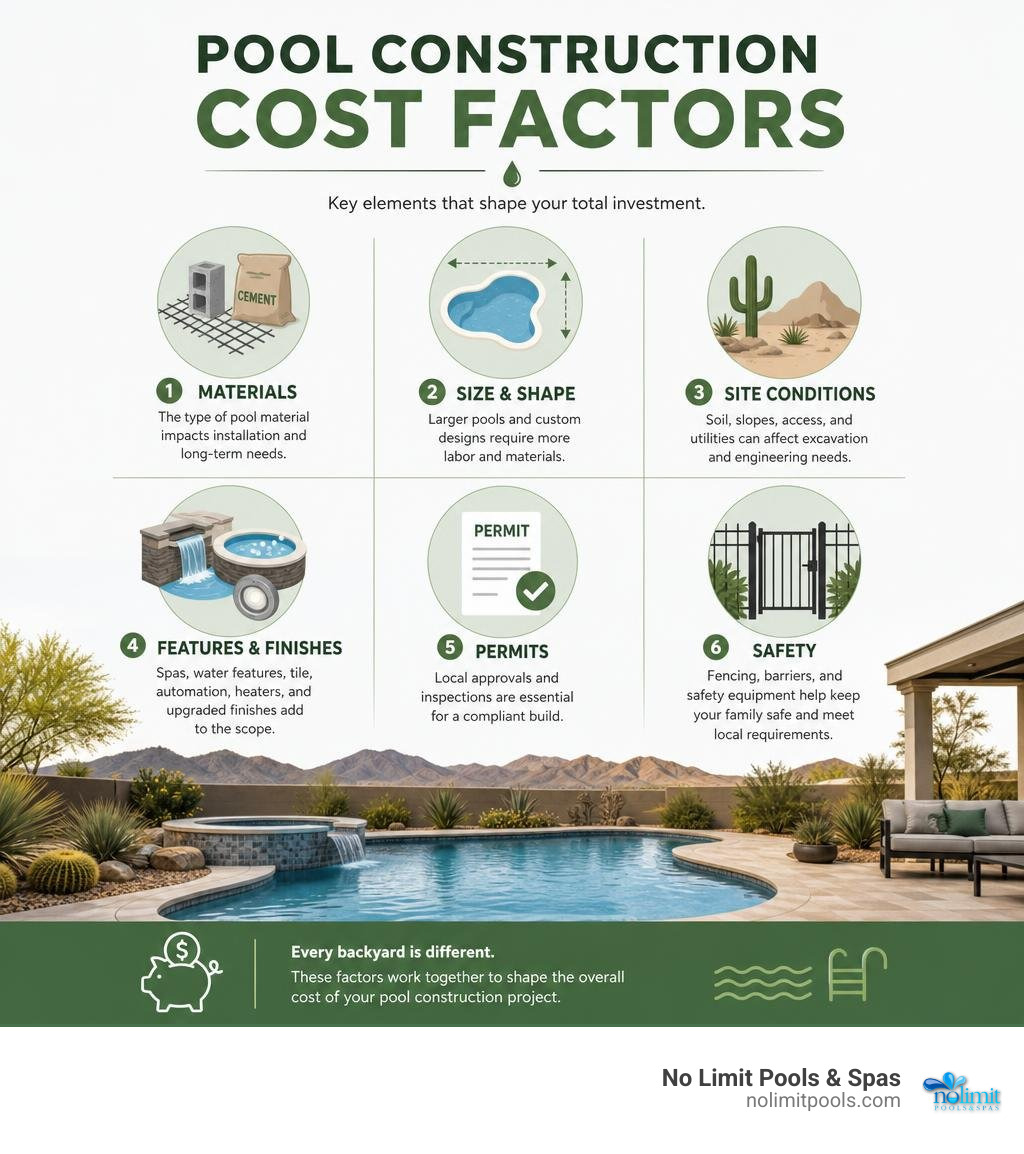
Pool Construction is the process of designing, permitting, excavating, building, and finishing a swimming pool and its surrounding outdoor space. For most Arizona homeowners, the total cost depends on the pool type, size, site conditions, finishes, equipment, decking, and added features such as a spa, lighting, or waterfall.
A quick cost overview:
| Cost factor | Why it affects the budget |
|---|---|
| Pool material | Gunite, fiberglass, and vinyl liner pools have different installation methods and long-term needs. |
| Size and shape | Larger pools and custom freeform designs require more labor and materials. |
| Backyard conditions | Desert soil, slopes, access limitations, and utility lines can change excavation and engineering needs. |
| Features and finishes | Spas, water features, tile, automation, heaters, and upgraded decking add to the project scope. |
| Permits and safety | Local approvals, barriers, fencing, and inspections are necessary parts of a compliant build. |
A pool can create a better space for family time, outdoor entertaining, and relief from Arizona heat. It may also support home value in the right market, though the actual return depends on the neighborhood, pool design, condition, and buyer demand.
I am Marc Ballard, owner of No Limit Pools & Spas, and I build custom pools and complete outdoor living environments for homeowners throughout Mesa and nearby East Valley communities. My Pool Construction experience includes coordinating pool design, spas, decking, landscaping, patio covers, and outdoor amenities into one practical backyard plan.
Inground Pool Types: Concrete, Fiberglass, and Vinyl Liner Costs
When embarking on a Pool Construction journey, one of the first major decisions you will face is selecting the construction material for your inground pool shell. In-ground swimming pools generally fall into three main construction categories: gunite (concrete), fiberglass, and vinyl liner. Each option comes with distinct pricing structures, structural characteristics, design flexibilities, and ongoing maintenance expectations.
Understanding how material choice influences both upfront installation costs and long-term expenses is vital for creating a realistic project budget.
| Feature / Metric | Gunite (Concrete) Pools | Fiberglass Pools | Vinyl Liner Pools |
|---|---|---|---|
| Upfront Cost Range | Premium initial investment | Mid-to-high initial investment | Lowest initial investment |
| Shell Lifespan | 50+ years (structural shell) | 25 to 30+ years | Wall structure varies; liner lasts ~10 years |
| Design Flexibility | Unlimited custom shapes & depth | Pre-manufactured factory molds | High design flexibility with modular panels |
| Installation Speed | 6 to 8 weeks (after permits) | 2 to 4 weeks (after permits) | ~2 weeks (after permits) |
| Surface Texture | Plaster/Pebble (textured, durable) | Ultra-smooth gelcoat (algae resistant) | Smooth vinyl surface |
| Maintenance Level | Higher chemical & brushing needs | Lowest chemical & maintenance cost | Moderate (requires replacement every decade) |
Advantages of Gunite Concrete Pools
Gunite (a mixture of sand and cement sprayed pneumatically over a heavy steel frame) represents the gold standard in modern pool engineering. Because gunite pools are cast in place directly inside your excavated yard, they provide unmatched design flexibility. Whether you envision a classic geometric lap pool, a natural freeform oasis with rock waterfalls, or a modern architectural pool built on sloped ground, gunite allows us to sculpt virtually any shape, depth, or entry feature.
Beyond aesthetic versatility, gunite offers unmatched structural durability. A rebar-reinforced concrete shell withstands tough regional conditions, including expansive desert clay and shifting earth. You can also customize your interior finish using smooth plaster, vibrant glass beads, or premium pebble aggregate for a striking visual look. Explore our options for custom New Pool Construction to see how gunite shapes can transform your property.
Fiberglass vs. Vinyl Liner Considerations
Fiberglass pools are engineered from pre-manufactured shell molds that arrive at your home ready for placement. The interior of a fiberglass pool features an ultra-smooth, non-porous gelcoat finish. This smooth surface prevents algae from embedding into tiny pores, dramatically reducing chemical consumption and weekly scrubbing. While factory-molded shapes mean customization options are restricted, installation speeds are noticeably faster. Modern fiberglass choices complement many residential yards, though delivery logistics require sufficient street and yard clearance for crane transport.
Vinyl liner pools offer a budget-friendly initial entry point for inground installations. These pools utilize steel or polymer wall panels anchored on concrete footings, lined at the bottom with a smooth sand-and-cement slurry finish before fitting a durable vinyl skin. While vinyl lined structures provide comfortable entry pricing, long-term costs must account for periodic liner wear. The average life of a vinyl liner is about 10 years, after which replacement is required. For panel-based builds, detailed engineering specs such as those found in the official Ultimate Pool Manual demonstrate how 14-gauge ZAM steel and precise concrete collar footings secure structural integrity over time.
Step-by-Step Pool Construction Process and Timeline

Building a pool is a multi-phase structural engineering project that transforms your raw backyard space into a fully functional water sanctuary. While timelines vary depending on permit processing, pool type, site accessibility, and design complexity, understanding the sequence helps set accurate expectations.
An in-ground vinyl liner pool installation takes about 2 weeks once ground is broken, whereas an in-ground gunite concrete pool installation takes from 6 to 8 weeks (not including permit processing time).
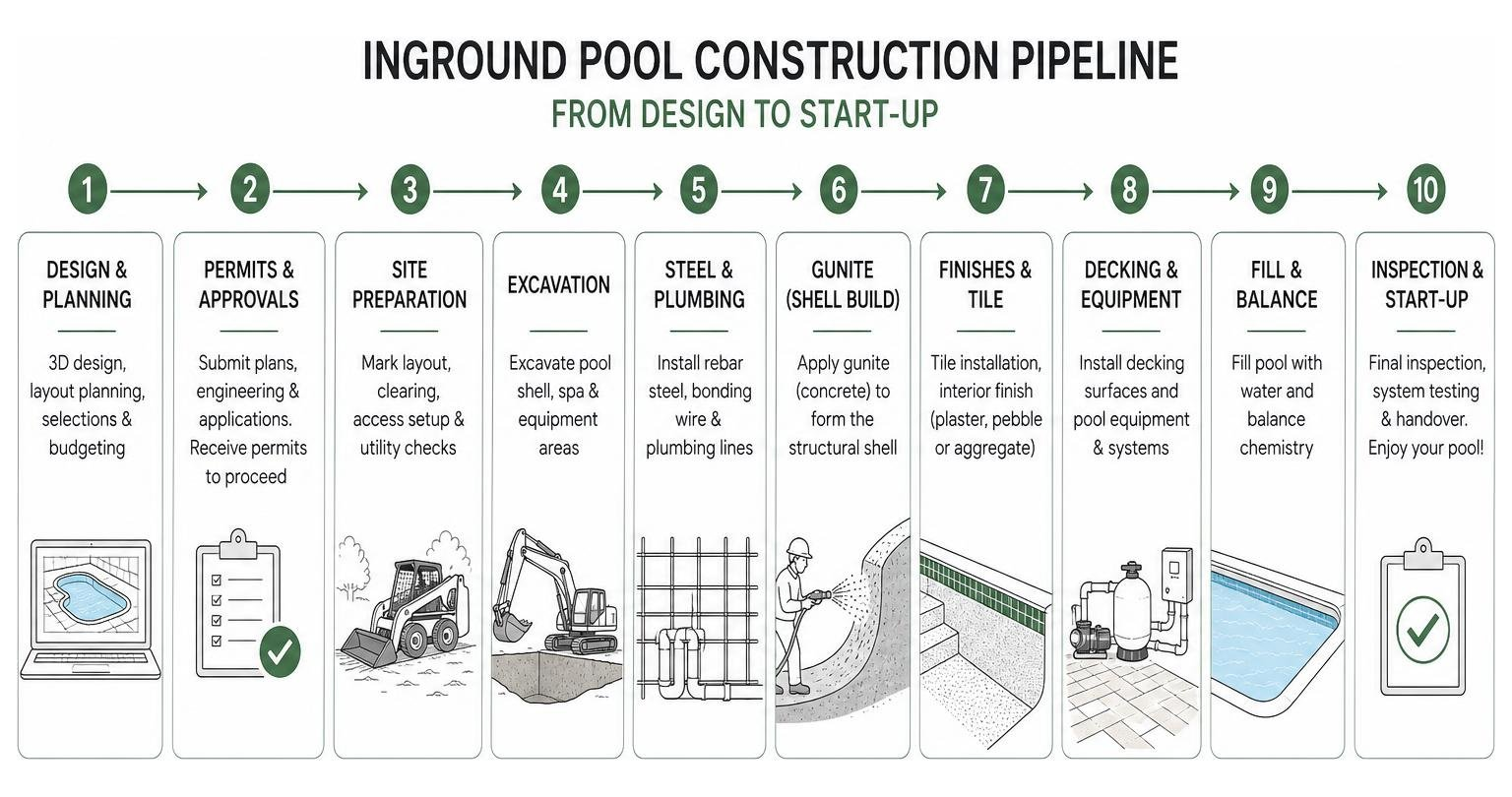
Knowing what happens during each construction phase ensures you stay informed from start to finish. For a deep dive into project durations, check out our guide on How Long Does It Take to Build a Pool?.
Initial 3D Design and Layout Planning
Every successful build starts on paper—or more accurately, in a advanced 3D digital environment. During the initial design consultation, we map your yard layout, evaluate home architecture, discuss lifestyle preferences, and establish budget guidelines. Using 3D computer modeling, you can preview exactly how your custom pool, attached spa, travertine decking, outdoor kitchen, and landscaping elements fit your space long before heavy machinery arrives.
Custom 3D planning is critical for homeowners with compact backyards or unique sloped elevations. By tailoring the shape—such as fitting a sleek rectilinear geometric pool into a tight footprint—you can maximize shallow water lounge space without overwhelming your property. Homeowners looking for inspiration in specific geographic locations can view our dedicated Inground Pool Construction in Scottsdale resource.
Excavation, Plumbing, and Shell Installation
Once municipal permits are secured and layout lines are staked in your yard, heavy machinery begins site excavation. Skilled earthmovers dig the precise shape, depth, and bench contours of your custom pool, hauling away tons of dirt and rock.
Immediately following excavation, our crews erect a thick steel cage using high-tensile rebar tied in a precise grid pattern across the entire floor, walls, steps, and benches. Heavy-duty schedule 40 PVC plumbing lines, main drains, skimmers, return jets, hydrotherapy spa lines, and water feature lines are laid beneath the steel grid.
For gunite pools, concrete is pneumatically shot through a high-pressure hose, enveloping the steel structure to form a solid monolithic vessel. Once cured, decking is installed, electrical sub-panels are wired to pumps and heaters, and interior plaster or pebble aggregate is troweled onto the shell. Learn more about day-to-day site activity in our detailed overview of What to Expect During Your Swimming Pool Construction.
Financial Factors, Permits, and Contract Safeguards
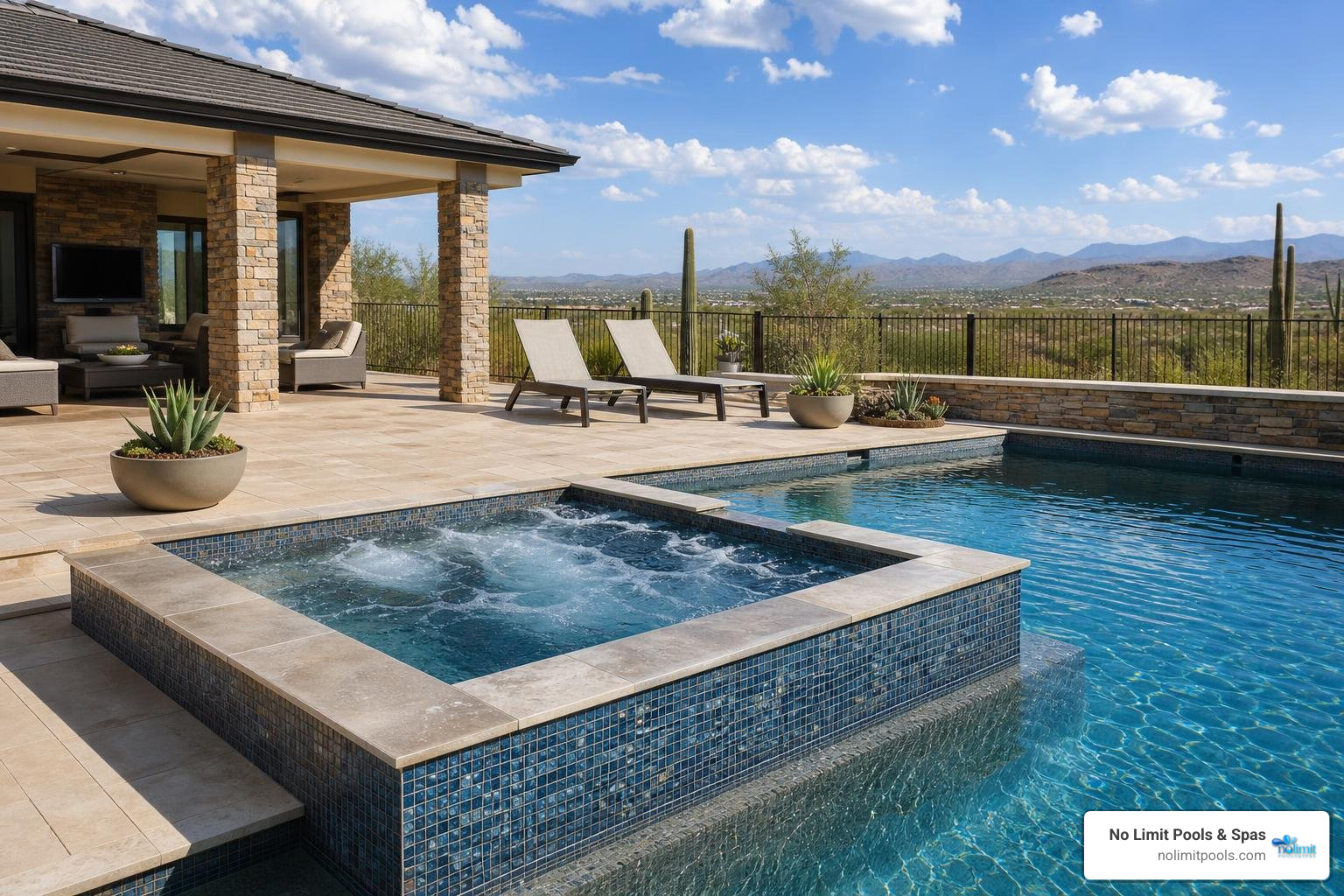
A comprehensive Pool Construction budget encompasses far more than just digging a hole and pouring concrete. Site preparation, municipal permitting, engineering approvals, electrical upgrades, decking, and safety enclosures all contribute to the overall project total. Preparing a clear financial plan and understanding consumer legal rights ensures your project runs smoothly without unwanted financial surprises.
When financing your dream backyard project, most pool builders collaborate with trusted third-party lending institutions that offer both conventional home equity loans and specialized unsecured pool construction financing options tailored to your budget.
Navigating Pool Construction Permitting and Site Requirements
Before any ground is broken, formal engineering plans must be submitted to your local city or county building department for review and permit issuance. Municipal permits ensure that pool designs comply with local building codes, structural strength metrics, electrical safety standards, zoning setbacks, and property line restrictions.
Site conditions strongly dictate engineering expenses:
- Desert Soil Conditions: Dense caliche clay or rocky soil layers require specialized heavy equipment, like hydraulic breakers, during excavation.
- Sloped Ground: Yards with steep grading changes require structural retaining walls and engineered footings to stabilize surrounding decks.
- Access Limitations: Narrow side yards may prevent standard excavation machinery from entering, requiring micro-equipment or manual earthmoving.
- Utility Lines: Underground electric, gas, water, or fiber-optic lines must be mapped and relocated prior to digging.
Evaluating Pool Construction Contracts to Avoid Scams
To protect your hard-earned financial investment, always review pool building contracts carefully before signing. Reputable pool contractors adhere strictly to state consumer protection regulations governing residential home improvements.
One crucial safeguard involves down payment limits: by law in many jurisdictions, the legal down payment for a swimming pool contract cannot exceed 10 percent of the total project cost or $1,000, whichever is less.
Homeowners must also watch out for “front-loading”—an illegal and deceptive contractor practice where a builder demands disproportionately high payment upfront before completing corresponding work milestones. If a builder collects 50% of the project funds after completing only 10% of gunite spraying, the homeowner faces massive financial risk if the contractor experiences business issues. Ensure your contract ties progress payments directly to finished phases (such as post-excavation, post-gunite, post-decking, and post-plaster start-up) and withholding final payment until all final equipment, inspections, and plastering are complete.
Custom Features, Maintenance, and Safety Regulations
Designing a custom pool allows you to turn a standard water vessel into a high-tech, resort-style sanctuary tailored to your lifestyle. Combining visual features, energy-efficient mechanical systems, simple maintenance routines, and code-compliant safety features creates an inviting backyard space.
Top features homeowners choose to enhance their builds include:
- Integrated Hydrotherapy Spas: Spillover spas elevated above the main pool offer relaxing warm-water jets and visually striking water transitions.
- Custom Waterfalls & Shear Descents: Natural stacked-rock waterfalls or modern sheer descent water curtains provide soothing ambient sound while masking neighborhood noise.
- Baja Tanning Shelves & Swim-Up Bars: Shallow 6-to-9-inch water ledges allow lounge chairs and umbrellas directly in the water, paired with built-in underwater bar stools.
- Smart Pool Automation & Energy-Efficient Equipment: Smartphone-controlled automation systems allow you to set water temperatures, control LED lights, and manage pump schedules from anywhere.
- Custom Decking Options: Travertine pavers, cool-decking, or natural stone create slip-resistant, comfortable walking surfaces around the pool edge.
Integrating Spas, Waterfalls, and Automation
Combining water features and smart technology elevates your daily swimming experience while improving overall operational efficiency. Elevated spillover spas allow warm water to cascade down decorative tile facets directly into the main pool basin, acting as both an relaxing spa and an eye-catching water display. Multi-colored LED pool lighting can be programmed for dynamic night shows or warm evening ambient illumination.
Smart automation systems bring modern convenience to your fingertips. Variable-speed circulation pumps, heat pumps, and automated chlorinators connect directly to home Wi-Fi networks. With a tap on your phone, you can heat the spa on your drive home from work, turn on waterfall features, adjust chemical feeders, and track energy usage, cutting monthly power bills compared to older single-speed pump setups.
Essential Pool Safety Features and Maintenance
Safety is a top priority for any pool installation. Municipal residential pool safety regulations require reliable safety barriers to protect young children and pets from unsupervised pool access.
Ongoing maintenance requirements vary depending on your pool’s interior material. Gunite pools require regular chemical monitoring, balancing pH and calcium hardness levels, along with periodic wall brushing to keep plaster surfaces smooth. Fiberglass pools need less chemical dosage due to their non-porous gelcoat surface. Vinyl liner pools require careful water balancing to prevent liner bleaching or premature degradation, as well as keeping sharp objects out of the pool to protect the vinyl skin.
Frequently Asked Questions About Building a Pool
How long does it take to construct an inground pool?
The construction timeline for an inground pool typically ranges from several weeks to a few months, depending on the material, design complexity, site accessibility, and local municipal permit approval times.
Once site permits are granted and construction begins:
- Vinyl liner pools generally require around 2 weeks for physical installation.
- Fiberglass pools take approximately 2 to 4 weeks.
- Gunite concrete pools require between 6 to 8 weeks for complete structural curing, plumbing, decking, masonry, interior finishing, and water start-up.
Unanticipated weather delays, extensive rock excavation, intricate custom hardscaping, or delayed municipal inspections can extend the total project duration.
What is the legal down payment limit for pool building?
Under statutory home improvement rules designed to protect consumers from contractor fraud, down payments for swimming pool construction are strictly capped. By legal standard, a contractor cannot require a down payment exceeding 10 percent of the total contract price or $1,000, whichever amount is less.
Any builder demanding 20%, 30%, or 50% upfront before work begins is violating standard consumer safety rules. Always ensure your contract contains a detailed, phase-based milestone payment schedule where funds are released only after each specific stage ( excavation, plumbing, gunite shot, decking, plastering) is successfully completed and inspected.
How much value does an inground pool add to a home?
According to industry real estate studies, installing a professionally designed inground pool can boost a home’s overall market valuation between 20% to 50% of the pool’s overall installation cost, depending heavily on local climate, neighborhood standards, and overall property landscaping integration.
In warm sunbelt regions where year-round outdoor living is part of everyday lifestyle, backyards featuring integrated swimming pools, custom spas, covered patios, and attractive decking command significant interest among homebuyers. Researching real estate trends in your specific neighborhood will help clarify how a custom pool investment aligns with local property values.
Transform Your Backyard into an Outdoor Oasis
A custom pool build does more than add water to your yard—it turns your property into an inviting outdoor haven for relaxation, family fun, and warm-weather entertaining. At No Limit Pools & Spas, we specialize in translating your ideas into high-quality custom pools, custom spas, outdoor kitchens, covered patios, travertine decking, and complete landscape designs tailored to your family’s needs.
As Mesa’s premier pool contractor, our hands-on leadership ensures top-quality craftsmanship and clear communication from original 3D design renders to final pool start-up. We serve homeowners across Mesa and surrounding East Valley communities—noting that we no longer service Phoenix—delivering beautiful resort-style outdoor environments at honest, competitive prices.
Are you ready to stop dreaming and start swimming? Explore our complete New Builds Process to see how seamlessly your project comes together, or contact our team today to schedule your custom design consultation for New Pool Construction!