
Pool Color Chart: Find the Water Color You Want
A pool color chart helps you compare the water color a finish is likely to create, not just the color of a dry sample. White and light gray finishes usually make water look bright blue. Medium blue or gray finishes can create a richer blue or aqua. Tan and green tones often produce a lagoon look, while charcoal and black finishes create darker, more reflective water.
Your pool may look lighter on shallow steps and deeper in the deep end. Sun, shade, and nearby landscaping can also shift its color throughout the day. Use the chart to narrow your choices, then view real pools with similar finishes before deciding.
I’m Marc Ballard, owner of No Limit Pools & Spas, where I help Arizona homeowners plan custom pools and complete backyard spaces. I use pool color charts alongside each yard’s light, landscaping, and design goals to help homeowners choose a finish they’ll love.
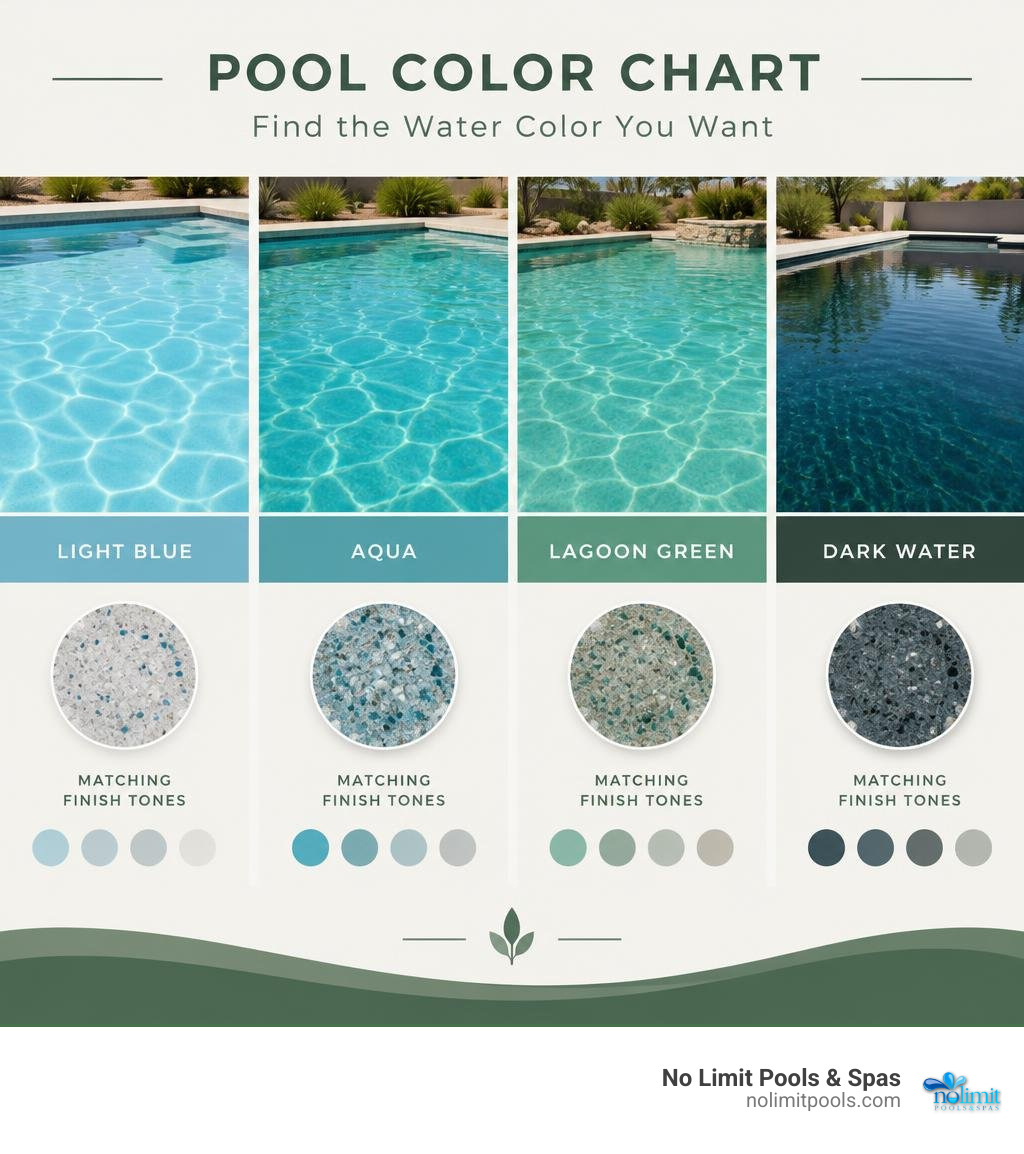
Reading a Pool Color Chart: Water Tones and Finish Pigments
Understanding a pool finish chart requires knowing how light interacts with water and interior pigments. Water is naturally clear, but it filters and absorbs light across the color spectrum. Red wavelengths of light are absorbed first, while shorter blue wavelengths scatter and reflect back to your eyes.
The underlying pigment of your pool finish acts as a canvas that enhances or modifies how light appears in the water. A dry aggregate swatch in a showroom will not look identical once it is submerged under several feet of water. For a clear explanation of how light absorption and reflection influence the color we see in water, see the U.S. Geological Survey’s overview of water color.
| Base Finish Pigment | Water Hue Result | Aesthetic Style | Best Sun Exposure |
|---|---|---|---|
| White / Ivory | Bright Sky Blue / Caribbean | Crisp, Tropical, Classic | Full Sun to Partial Shade |
| Light Gray | Crisp Cerulean / Soft Blue | Modern, Sleek, Vibrant | Full Sun |
| Medium Gray / Blue | Vivid Cobalt / Sapphire | Deep Oasis, Resort Style | Any Exposure |
| Tan / Gold / Buff | Teal / Aquamarine Green | Natural Lagoon, Desert Oasis | Full Sun |
| Charcoal / Black | Midnight Blue / Mirror Emerald | Dramatic, Modern Architecture | Full Sun (high reflection) |
Light Blue and Crisp Sky Water Hues
Light blue water is the quintessential look of residential swimming pools. This shade is achieved by using a pure white plaster base, ivory quartz aggregates, or light gray base pigments. The white surface maximizes the reflection of natural sunlight, allowing the blue spectrum of light to shine unobstructed.
In bright climates like Arizona, a light finish creates an ultra-crisp, inviting body of water reminiscent of Caribbean shallows. Light finishes also provide the highest contrast against underwater steps, benches, and swimmers, making them an excellent choice for families seeking maximum underwater visibility.
Medium Aqua and Vibrant Sapphire Blue Tones
Medium blue water strikes a balance between vibrant energy and visual depth. Incorporating French gray pigments, medium blue quartz, or subtle cobalt glass accents transforms standard reflections into rich, electric blues.
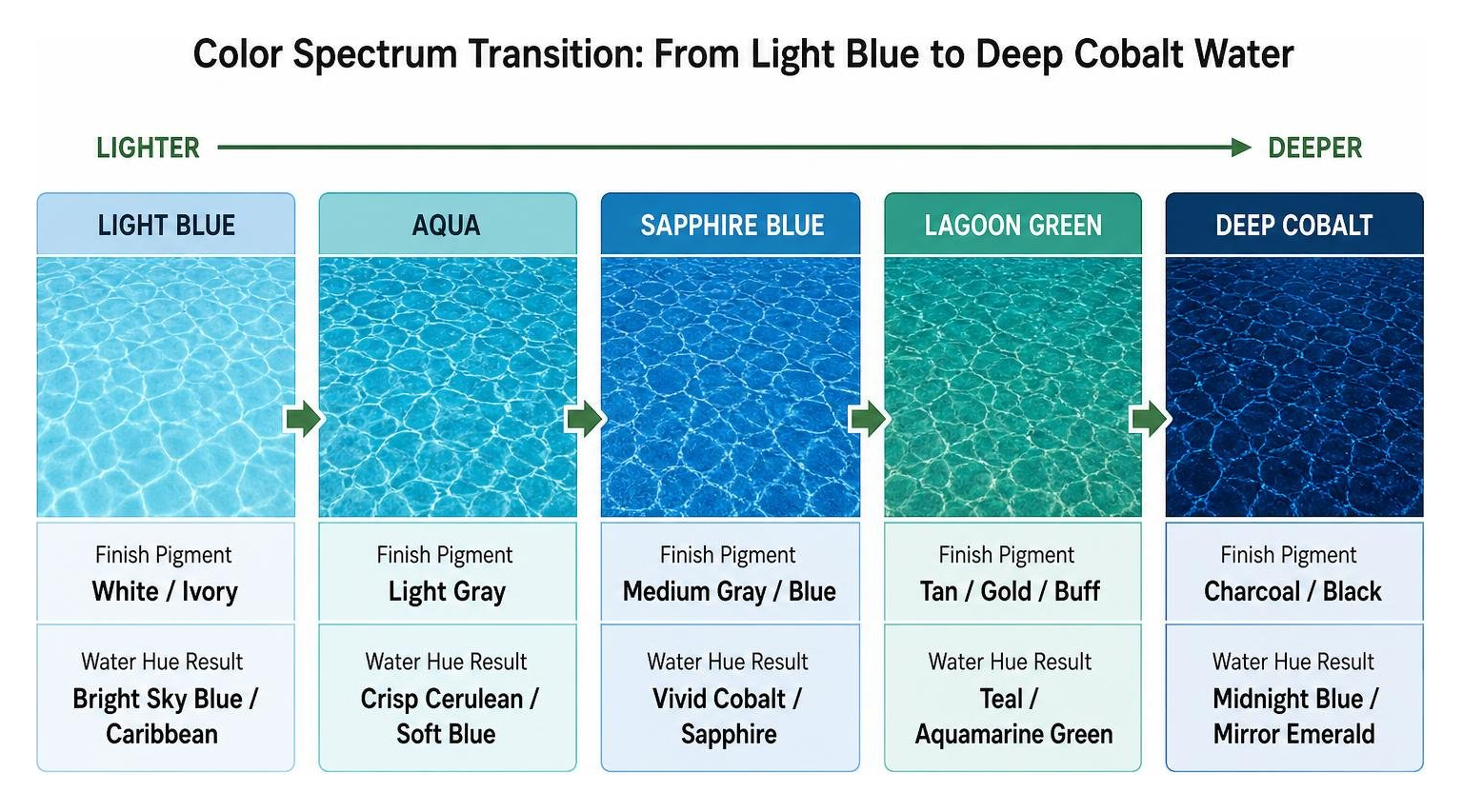
Sapphire and medium aqua tones mimic high-end luxury resorts. These pigments mask subtle organic debris or desert dust better than stark white surfaces while maintaining an inviting brilliance. To master this balance in your backyard, learning the practical steps for achieving your desired pool water color will ensure your chosen aggregate meets your expectations under natural daylight.
Deep Teal, Emerald, and Lagoon Green Finishes
If your landscape design leans toward lush, natural, or desert oasis aesthetics, green-tinted water is an exceptional option. These tones are produced not by using bright green plaster, but rather by utilizing tan, gold, buff, or warm brown aggregate bases.
When blue-scattered light passes over a yellow or tan pool floor, the optical mixture creates stunning shades of aquamarine, emerald, and tropical teal. These finishes blend seamlessly with natural stone boulders, rock waterfalls, and dense perimeter plantings, producing an organic swimming hole aesthetic.
Midnight Blue and Dramatic Dark Water Tones
Dark finishes using charcoal, dark slate, or jet-black pigments turn the pool into an architectural statement. Rather than reflecting light outward, dark pigments absorb sunlight and turn the pool surface into a mirror that reflects the sky, surrounding trees, and nearby structures.
In deep water, black and charcoal bases create dramatic midnight blues or moody emerald depths. These finishes suit sleek, contemporary hardscapes, geometric pool profiles, and high-end modern homes.
How Finish Materials Shape Your Pool Color Chart Selection
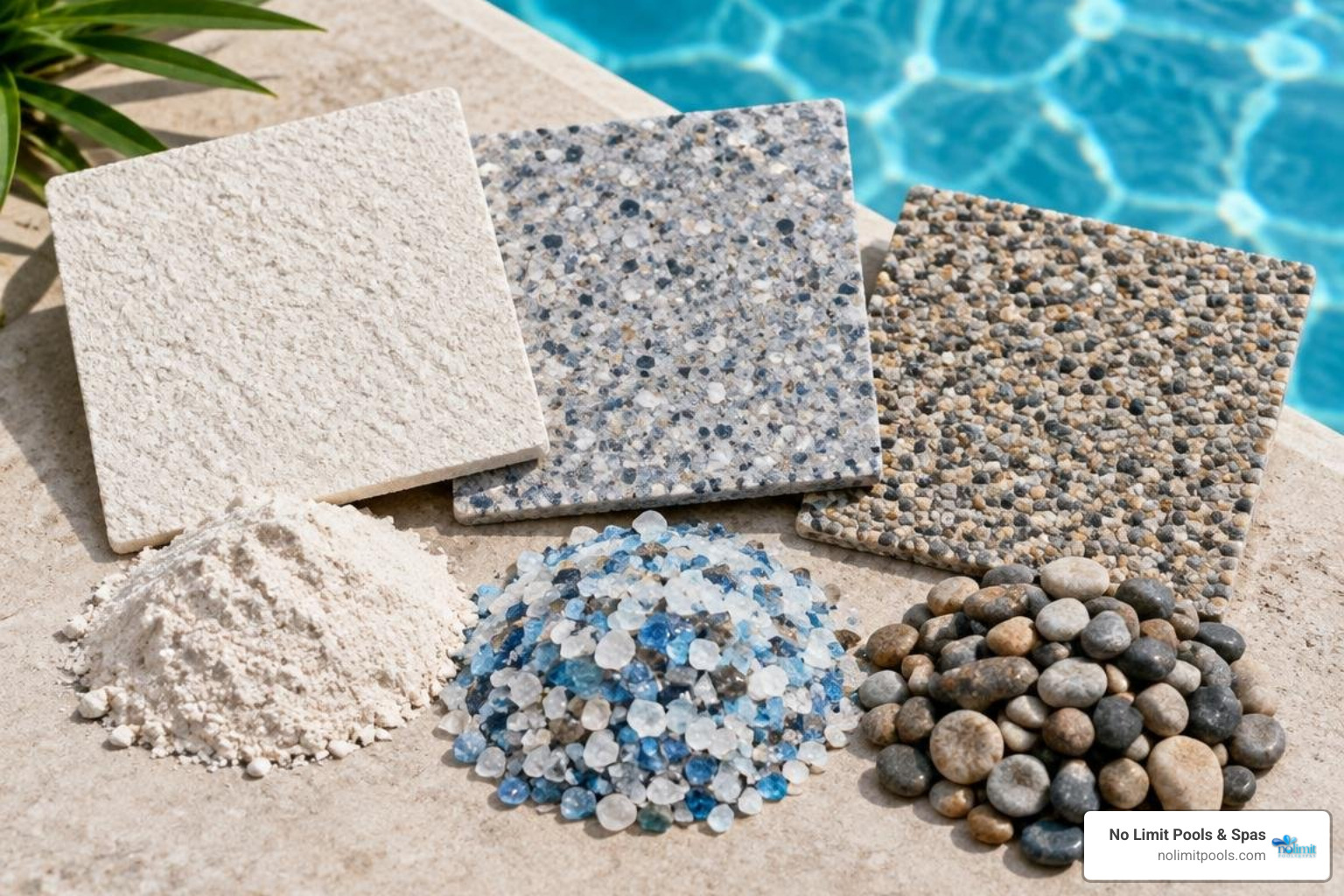
The base color of your plaster is only part of the equation; the physical material you select dictates texture, longevity, sparkle, and subtle color shifts. An in-depth comparison of inground pool finishes reveals how aggregates change both the tactile feel and visual richness of your water.
Homeowners can review a detailed pool finish selection resource to evaluate how manufacturers blend smooth plaster, dense quartz, and natural pebbles into distinct product tiers.
Decoding the Plaster and Pebble Pool Color Chart
- Standard Plaster: Traditional plaster combines white Portland cement with crushed marble aggregate. It creates a smooth surface and classic color, though it requires diligent water chemistry balancing to prevent etching and mineral staining over its 5 to 8-year lifespan.
- Quartz Aggregates: By blending ceramic-coated quartz crystals into the plaster matrix, quartz finishes introduce speckles of color and substantially improve stain and acid resistance. The hard mineral composition extends the finish lifespan to 10–15 years.
- Pebble Finishes: Natural, smoothed river stones embedded in colored cement produce textured, riverbed-like surfaces that last 15 to 20+ years. The varied pebble colors—ranging from black obsidian and white quartz to jade greens—create multidimensional water color that looks different from every angle.
- Glass Bead Enhancements: Blending iridescent glass beads into pebble or plaster surfaces adds unmatched optical brilliance. Glass captures and refracts direct rays, making the water shimmer under midday sun.
Environmental Factors That Alter Perceived Pool Water Color
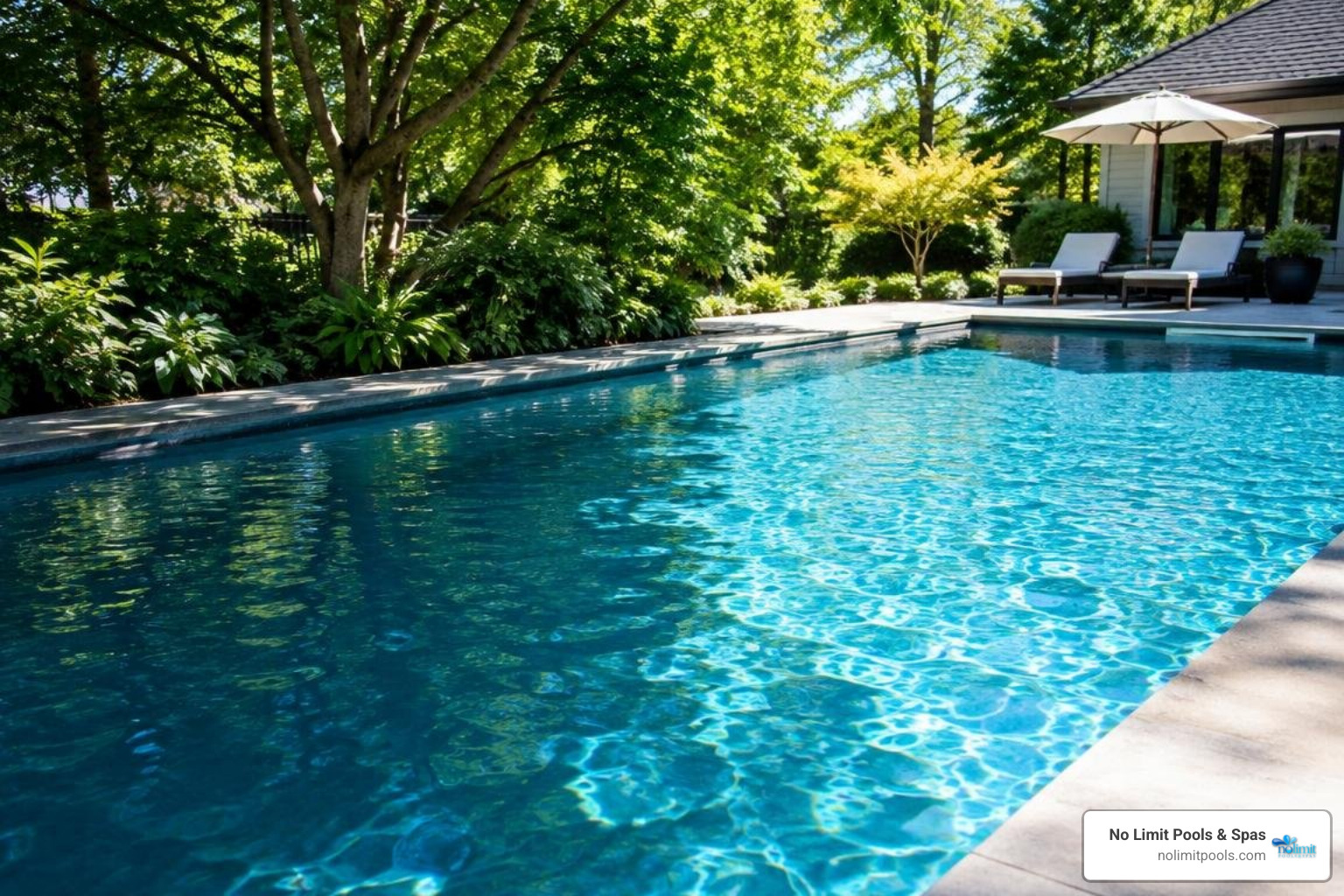
A pool finish does not exist in a vacuum. The exact same finish will produce entirely different water hues in two different yards due to surrounding environmental variables.
| Environmental Factor | Visual Impact on Water Color | Design Consideration |
|---|---|---|
| Full Direct Sunlight | Brightens and saturates blue/aqua tones; highlights sparkle. | Finishes appear 1–2 shades lighter at midday. |
| Cloud Cover / Overcast | Water appears darker, flatter, and more gray or green. | Dark finishes may look deep and moody. |
| Tree Canopy / Greenery | Reflects green into the surface, turning blue water toward teal. | Place away from dense overhanging branches. |
| Desert Hardscaping | Warm travertine or sand decking highlights turquoise tones. | Enhances contrast with vibrant blue water. |
| Water Movement | Surface ripples create prism-like glitter and dynamic refraction. | Water features increase apparent surface sparkle. |
How Depth and Sunlight Shift Your Pool Color Chart Results
Water depth dramatically alters how light refracts. In shallow areas—such as a 9-inch deep tanning ledge or entry step—the underlying finish color is clearly visible with minimal water refraction, appearing pale and light. As the pool floor drops to 4, 6, or 8 feet, the water volume increases, absorbing more red light and multiplying the saturation of the blue hue.
Sun angle also shifts perceived color continuously from dawn to dusk. Morning and late-afternoon sun rays enter the water at low angles, reflecting warmer tones off the surface. Midday sun penetrates straight to the floor, illuminating aggregates and creating maximum vibrancy.
Backyard Landscaping, Coping, and Tile Reflections
Your pool functions as an expansive, liquid mirror. Surrounding materials directly cast their tones onto the water:
- Waterline Tile: Coordinating your pool with complementary Arizona pool tile ideas and designs defines the perimeter and frames the water surface. Selecting an intentional waterline tile—such as deep cobalt porcelain or iridescent glass—creates a seamless transition between the pool finish and the surrounding deck. For custom accents, reviewing an ultimate checklist for comparing pool mosaic tiles can help you select matching step markers and interior artwork.
- Decking and Coping: The color of your surround reflects into the perimeter of the water. Exploring the top 10 pool coping ideas for Arizona homes demonstrates how light ivory travertine decking keeps water looking bright blue, whereas dark slate or red pavers introduce warmer, earthier reflections.
- Landscaping: Surrounding your pool with lush ficus trees or palms will add natural green undertones to the surface. Conversely, desert xeriscapes with decomposed granite and warm boulders make crisp blues stand out with high contrast.
Nighttime Aesthetics and Pool Lighting Coordination
When the sun sets, your pool’s aesthetic transitions entirely to artificial lighting. The daytime interplay between sunlight and plaster is replaced by internal illumination reflecting off the pool floor and walls.
Using modern LED color-changing lights that set the mood allows you to transform your water color with the push of a button. For our custom builds, we exclusively install energy-efficient Hayward LED pool lights to achieve vibrant, reliable nighttime illumination.
How your finish reacts to nighttime lighting depends on its base tone:
- Light Finishes: Act as an ideal canvas, dispersing LED light evenly across the entire pool with maximum brightness.
- Medium Tones: Enhance deep blue, cyan, and violet light settings, creating rich resort vibes.
- Dark Finishes: Absorb significantly more artificial light. Dark plaster pools require strategic fixture placement to ensure adequate illumination across steps and deep zones.
Understanding the best way to light up your pool at night ensures your pool remains safe and visually captivating long after dusk.
Frequently Asked Questions About Pool Color Selection
Does a darker pool finish increase water temperature?
Yes. Darker pool finishes (such as charcoal, dark gray, and black) absorb more solar thermal radiation than light plaster. In sunny climates, a dark pool surface can raise the average water temperature by 3°F to 7°F compared to a white plaster pool. While this provides a welcome, passive heating boost in spring and autumn, homeowners in extremely hot desert regions must weigh whether additional summer water warmth is desirable.
How does water chemistry affect pool finish vibrancy?
Water chemistry directly dictates how vibrant your pool color remains over time. High pH and high calcium hardness can cause calcium scale to deposit across the interior finish, leaving a chalky white film that dulls vibrant blue and dark plaster colors.
Conversely, aggressive, low-pH water will etch the plaster surface, stripping away pigment and exposing rough base materials. Regularly testing your water and using a reliable pool test strip color chart to monitor pH, total alkalinity, and calcium hardness will protect your interior finish from premature fading and discoloration.
Which pool color provides the highest underwater visibility for safety?
White, light gray, and light blue pool finishes offer the highest underwater visibility. These surfaces reflect light back up through the water column, clearly outlining the bottom of the pool, steps, benches, and swimmers. Dark charcoal and black finishes absorb light and create heavy surface reflections, which can make it more challenging to gauge water depth or spot objects on the pool floor from a distance.
Bring Your Dream Pool Color to Life
Selecting the right interior finish is one of the most exciting design decisions you will make for your backyard oasis. By balancing base pigments, material durability, depth dynamics, and surrounding landscape elements, you can achieve a water color that perfectly matches your personal style.
At No Limit Pools & Spas, we design and build custom inground swimming pools, luxury spas, and complete outdoor living environments tailored specifically to the unique Arizona climate. From initial design to expert craftsmanship, our team helps homeowners in Mesa and surrounding communities create breathtaking backyards built to stand the test of time.
Explore our detailed comparison of inground pool finishes to find the perfect material and color combination for your upcoming pool project.