
What Should You Compare When Reviewing Pool Prices?
When comparing pool prices in Arizona, look beyond the base price and compare pool type, size, depth, excavation, equipment, decking, electrical work, permits, site conditions and included features. Two pool quotes with similar starting prices can have very different final costs depending on what each proposal includes.
Pool prices vary considerably based on construction type, dimensions, depth, site conditions, features and local labor costs. A compact 12×24 pool generally requires less excavation, plumbing, structural steel and construction material than an expansive 20×40 pool. Increasing pool depth can also raise costs because additional excavation, structural reinforcement and concrete may be required.
To get a complete picture of building costs from excavation to final startup, checking our comprehensive A to Z guide to pool construction costs will help you benchmark the numbers before you review formal contractor bids.
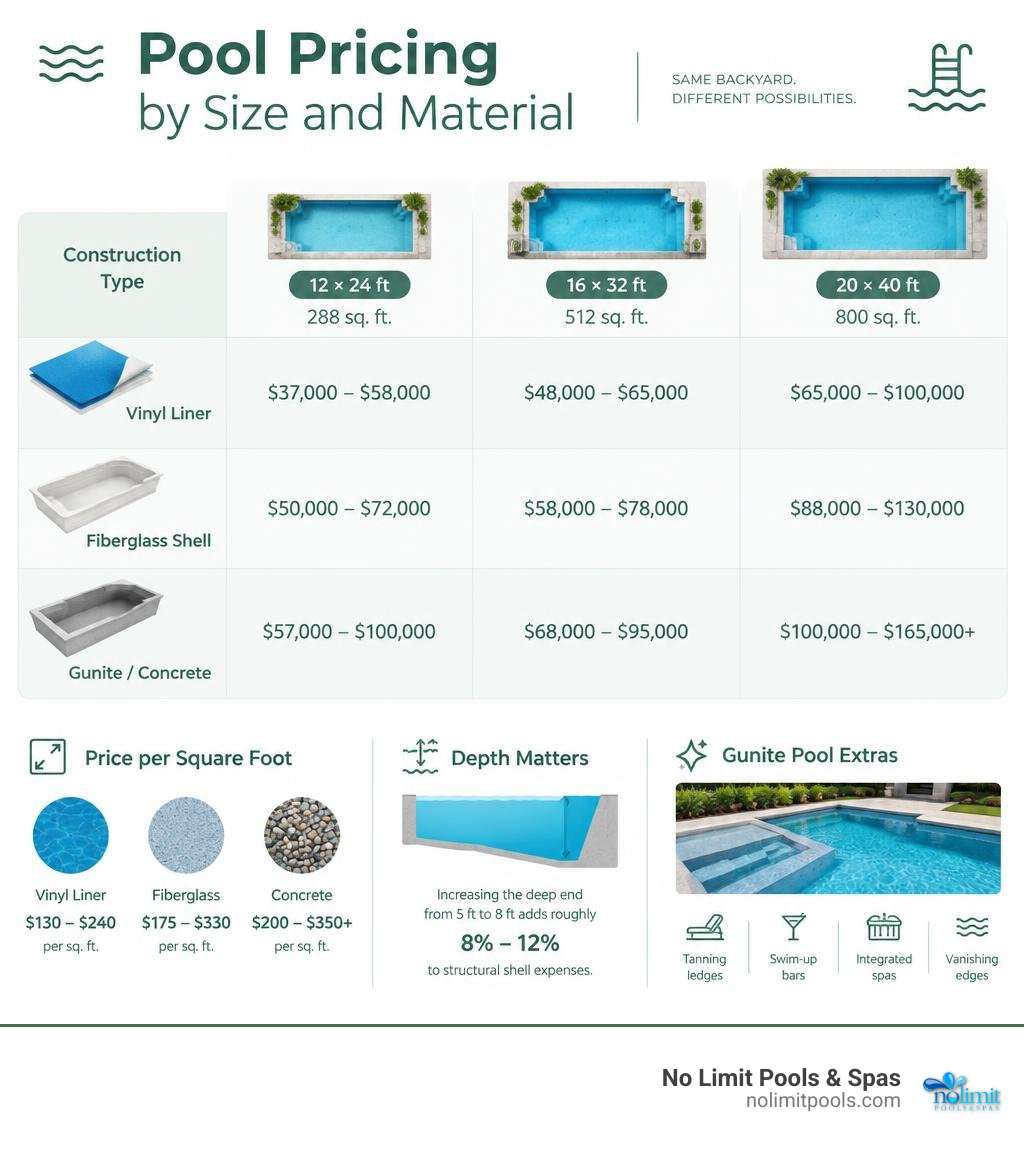
The table below breaks down the realistic 2026 price ranges across standard pool dimensions and construction types, incorporating basic equipment and standard perimeter coping:
| Pool Size | Surface Area | Vinyl Liner (Installed) | Fiberglass Shell (Installed) | Gunite / Concrete (Installed) |
|---|---|---|---|---|
| 12×24 ft | 288 sq. ft. | $37,000 – $58,000 | $50,000 – $72,000 | $57,000 – $100,000 |
| 16×32 ft | 512 sq. ft. | $48,000 – $65,000 | $58,000 – $78,000 | $68,000 – $95,000 |
| 20×40 ft | 800 sq. ft. | $65,000 – $100,000 | $88,000 – $130,000 | $100,000 – $165,000+ |
Square-foot metrics provide a helpful preliminary baseline. Vinyl liner pools generally install at $130 to $240 per square foot of water surface, fiberglass runs between $175 and $330 per square foot, and custom concrete pools range from $200 to $350+ per square foot.
Gunite and Shotcrete Concrete Pool Price Variables
Gunite pools represent the gold standard for structural longevity and architectural freedom. Unlike factory-molded alternatives, a gunite pool is pneumatically applied on-site over an engineered grid of steel rebar. This technique allows us to sculpt custom tanning ledges, swim-up bars, integrated spas, vanishing edges, and deep water features directly into the topography of your yard.
However, hand-crafted masonry involves intensive on-site labor and premium materials. When reviewing an inground pool cost in Arizona, your interior finish choice will drive a large portion of the budget. Standard white plaster is the entry-level baseline, but upgrading to an aggregate pebble interior (such as mini-pebble or polished glass blends) typically adds $8,500 to $18,000+. Pebble finishes dramatically extend interior lifespan and resist local water chemistry fluctuations far better than traditional plaster.
Fiberglass Shells and Inground Vinyl Liner Options
Fiberglass pools arrive at your residence as a fully manufactured, single-piece structure composed of woven glass fibers and finished with an ultra-smooth, non-porous gelcoat layer. They offer lightning-fast installation times, often seating into the ground within days once excavation finishes.
However, fiberglass shells have structural limitations:
- Width is strictly restricted to roughly 16 feet due to oversize highway shipping regulations.
- Heavy crane access is non-negotiable; tight side yards or overhead power lines can add thousands in crane rental fees.
- Factory shapes cannot be altered to navigate irregular lot easements.
Vinyl liner pools are popular in seasonal northern markets for their lower initial price point ($35,000 to $80,000). They use steel or polymer wall panels set on a concrete footing with a custom-fitted vinyl membrane. However, when evaluating what type of pool is best in Arizona, vinyl faces distinct hurdles: intense desert sun and high UV exposure degrade vinyl liners rapidly, requiring replacements every 5 to 7 years.
Crucial Cost Factors and What Base Quotes Leave Out
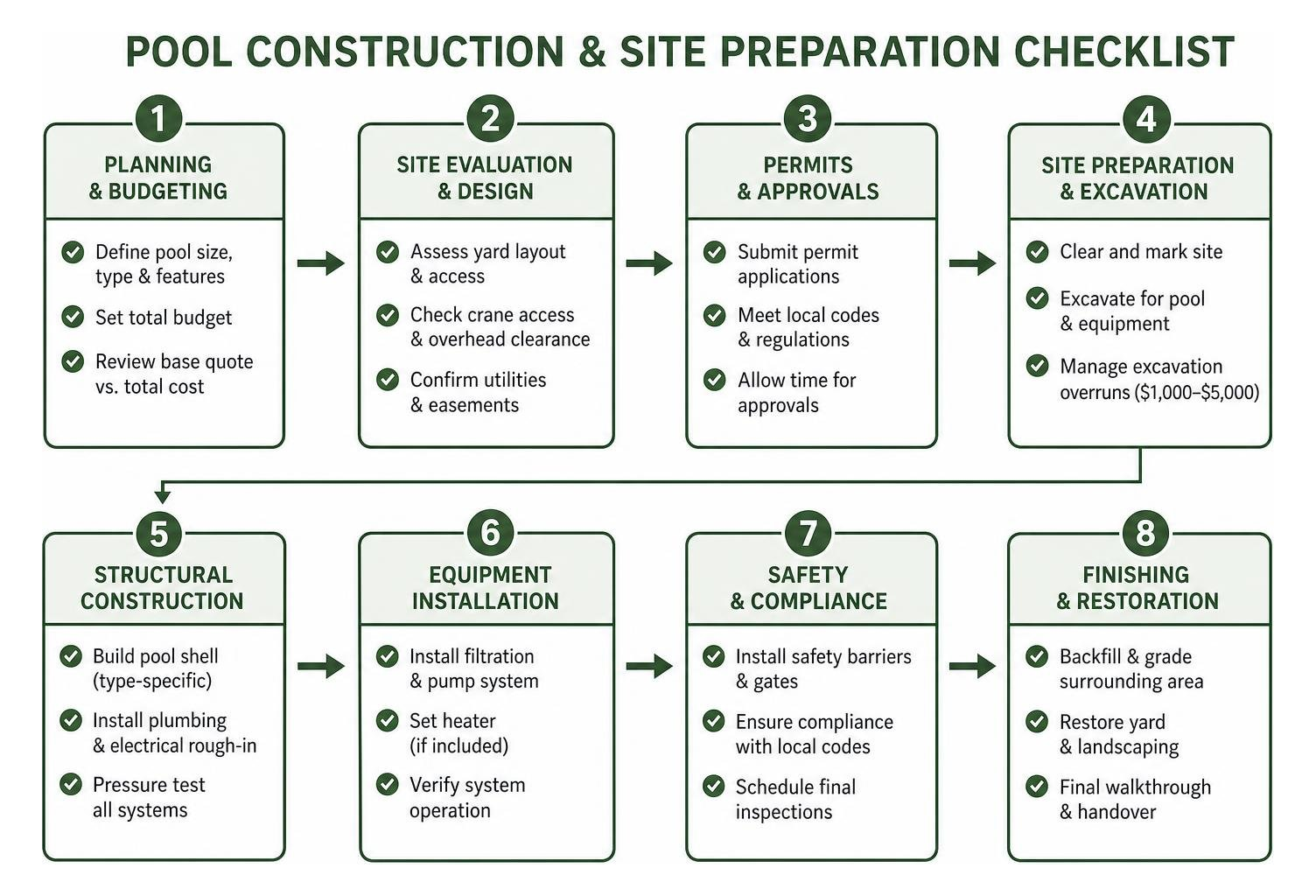
A common pitfall for first-time buyers is assuming an initial quote covers every component required to take their first swim. In reality, a “base pool quote” often covers only the structural shell, standard filtration, and basic plumbing.
Site Conditions, Excavation Overruns, and Permits
Standard excavation costs range between $1,000 and $5,000, but hidden underground obstacles can quickly introduce change orders:
- Caliche & Hardpan Soil: Common throughout the East Valley, hard caliche layers require heavy pneumatic rock hammers, adding $1,500 to $5,000+ in excavation surcharges.
- Bedrock & Boulders: Solid subterranean stone can add upwards of $10,000 to excavation line items.
- High Water Tables & Sandy Soil: Unstable ground requires hydro-static relief valves, de-watering pumps, and extra crushed-stone backfill.
- Access Restraints: If access to the backyard is under 8 feet wide, standard bobcats cannot enter. Hand-digging or micro-excavators increase labor timelines substantially.
Permits and engineering stamps represent another variable. Standard municipal building, electrical, and plumbing permits cost between $350 and $1,500, but complex structural drawings can lift administrative fees beyond $2,500. Selecting the right layout early by referencing a guide to average pool sizes for Arizona homes helps keep engineering reviews efficient and cost-effective.
Before signing a contract, compare each pool proposal line by line rather than relying only on the base price. Review excavation, structural construction, plumbing, equipment, electrical work, decking, safety requirements, permits and any site-specific work that may affect the final cost. A detailed proposal makes it easier to compare pool prices accurately and identify expenses that may not be included in the initial quote.
Essential Add-Ons: Decking, Fencing, and Electrical
The surrounding outdoor living environment transforms an excavation hole into a functional retreat, but these trades are frequently excluded from base builder quotes:
- Decking & Surrounds: Standard brushed concrete costs $6 to $10 per square foot, while premium artistic pavers or natural travertine ranges from $16 to $32 per square foot installed. A standard 800 sq. ft. deck package can add $12,800 to $25,600.
- Safety Fencing & Barriers: International building codes require a 48-to-60-inch non-climbable barrier with self-closing, self-latching gates. Perimeter safety fencing for a 200-to-300-linear-foot yard runs between $2,000 and $13,500 depending on whether you choose mesh, tubular steel, or wrought iron.
- Electrical Runs & Sub-Panels: Licensed electrical hookups range from $2,000 to $10,000. If your home’s main service panel is maxed out, a 100-amp sub-panel upgrade adds $2,500 to $4,500.
- Automatic Safety Covers: Motorized, load-bearing covers offer supreme safety and thermal retention, costing $8,000 to $20,000 installed.
- Water Fill: Filling a 20,000-gallon pool from municipal water lines or dedicated water-haul trucks costs between $250 and $1,200 depending on local utility tier rates.
Comparing Lifetime Ownership and True Operational Costs
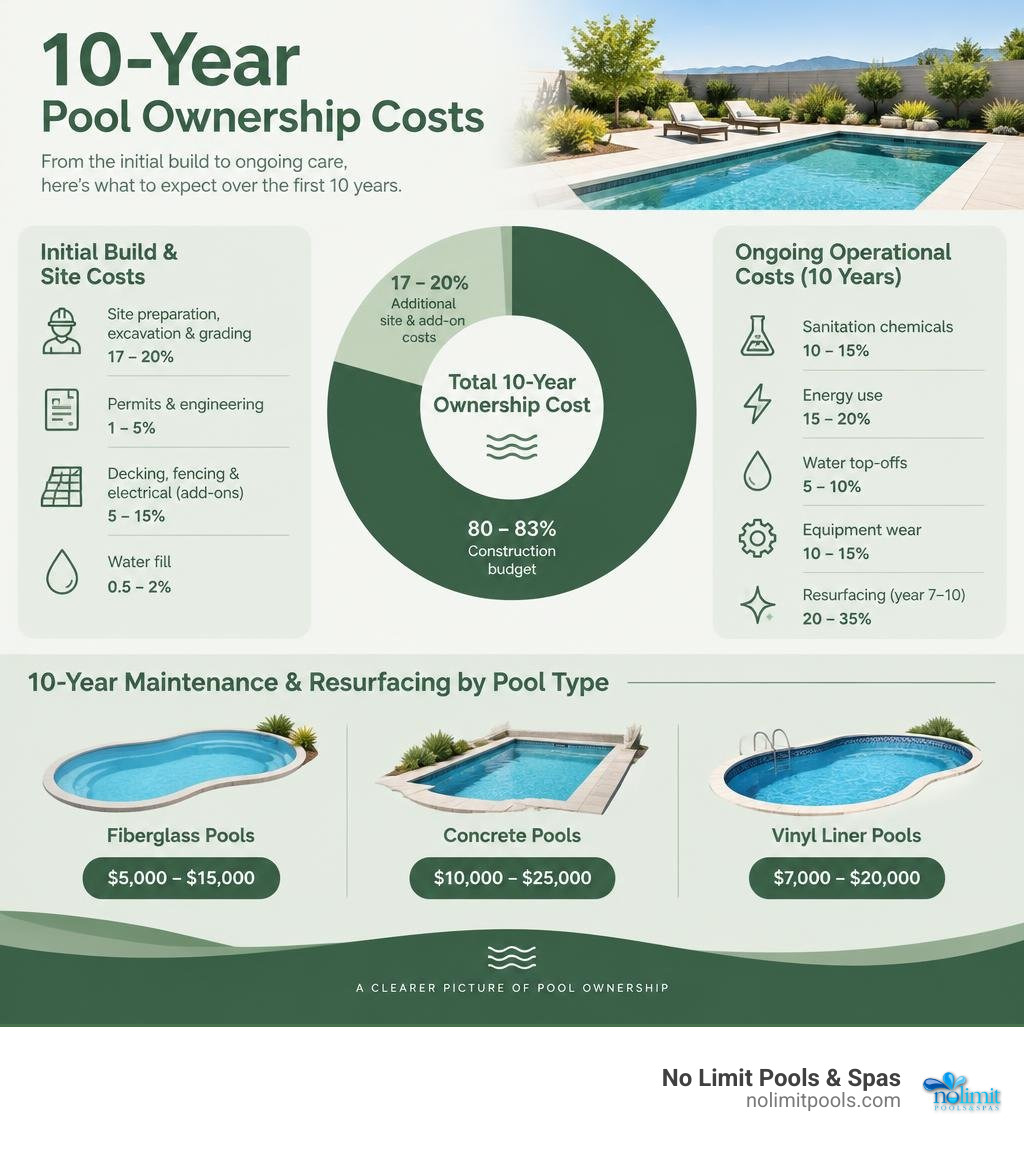
A comprehensive price comparison must examine the total cost of ownership across a 10-year operational window. Ongoing expenses include sanitation chemicals, energy use, water top-offs, equipment wear, and major surface restorations.
Evaluating 10-Year Maintenance and Resurfacing by Pool Price
Each pool construction type has different long-term maintenance considerations that can affect the overall cost of ownership.
Fiberglass Pools: Fiberglass has a smooth, non-porous gelcoat surface that can make routine cleaning and algae management easier. The surface does not require traditional plaster resurfacing, although the gelcoat can eventually require restoration depending on age, condition and water chemistry.
Vinyl Liner Pools: Vinyl liner pools require careful water chemistry and protection from punctures, fading and deterioration. The liner will eventually need replacement, making liner replacement an important long-term ownership expense to consider when comparing pool prices.
Gunite and Concrete Pools: Gunite pools provide extensive design flexibility and structural durability, but their interior finishes require ongoing water chemistry management and eventually need resurfacing. The timing and cost depend on the finish, water chemistry, maintenance practices and overall condition of the pool.
For practical strategies to streamline these ongoing expenses, read our practical tips on building a pool without breaking the bank.
Energy Efficiency, Water Usage, and Equipment Upgrades
Choosing energy-efficient pool equipment can help reduce ongoing operating expenses, particularly in Arizona where pools may operate for extended periods throughout the year.
- Variable-Speed Pumps: Variable-speed pool pumps can operate at lower speeds when full flow is unnecessary, reducing energy consumption compared with older single-speed equipment.
- Heat Pumps vs. Gas Heaters: Gas heaters provide rapid on-demand heating, while heat pumps transfer heat from the surrounding air and can provide an energy-efficient option under suitable operating conditions.
- Saltwater Chlorine Generators: Salt systems generate chlorine from dissolved salt, reducing the need for homeowners to manually add traditional chlorine products as frequently.
- Evaporation Management: Arizona’s dry climate can contribute to substantial pool-water evaporation. Pool covers can help reduce evaporation, conserve water and limit heat loss when the pool is not being used.
Smart Financing, Resale Value, and Contractor Selection
Because pool projects represent a significant home improvement, understanding your financing structure and working with the right builder ensures your investment delivers lasting value.
Loan Options and Interest Rate Impact
Homeowners typically fund pool builds through three primary lending avenues:
- Home Equity Lines of Credit (HELOCs) & Home Equity Loans: These secured financing options allow homeowners to borrow against available home equity. Rates, loan terms, fees and qualification requirements vary by lender, credit profile and market conditions. In certain circumstances, interest on home equity borrowing used for qualifying home improvements may be deductible; homeowners should consult a qualified tax professional regarding their individual situation.
- Unsecured Pool Loans: Offered by specialized home-improvement lenders, these loans generally do not require homeowners to use home equity as collateral. Interest rates, available terms and qualification requirements vary based on the lender, credit profile, loan amount and current market conditions.
- Builder Partner Financing: Pool builders frequently partner with lending networks to provide streamlined loan origination.
To understand loan terms, monthly carrying costs, and pre-qualification criteria, review how to finance a swimming pool in Arizona.
Here is how loan term lengths affect monthly payments and total interest on a standard $65,000 pool loan at 7.5% APR:
- 5-Year Term: $1,301 / month | Total Interest Paid: $13,060
- 7-Year Term: $1,000 / month | Total Interest Paid: $19,000
- 10-Year Term: $773 / month | Total Interest Paid: $27,760
- 15-Year Term: $602 / month | Total Interest Paid: $43,360
- 20-Year Term: $523 / month | Total Interest Paid: $60,520
A 10-year term may provide a middle ground between the higher monthly payments of shorter loans and the greater total interest expense associated with longer repayment periods.
Vetting Pool Builders and Avoiding Hidden Bids
Protecting yourself against construction delays and surprise change orders comes down to thorough contractor vetting. Always obtain three to five fully itemized bids.

Verify these essential builder credentials before signing:
- Active ROC Licensing & Insurance: Before hiring a pool builder, verify the contractor’s license and confirm the license classification covers the work being performed through the Arizona Registrar of Contractors. Also confirm applicable insurance coverage before signing a construction contract.
- Itemized Line-Item Scope: The contract should clearly list make and model numbers for all pumps, filters, heaters, sanitizers, and interior finishes.
- Defined Milestone Payment Schedules: Never pay large sums upfront. Standard schedules tie payments to clear milestones: excavation completion, steel/plumbing inspection, gunite shoot, tile/decking installation, and interior finish application.
- Realistic Timelines: Permitting takes 3 to 12 weeks depending on municipal backlogs. Once permitted, gunite construction requires 8 to 14 weeks, vinyl liner builds take 4 to 8 weeks, and fiberglass installs wrap in 2 to 4 weeks. To understand how project phases flow locally, explore how long it takes to build a pool in Arizona.
Be cautious when one pool estimate is significantly lower than the others. A lower price does not automatically indicate poor construction, but it should prompt a closer comparison of what is included. Review excavation allowances, steel specifications, plumbing, equipment, interior finish, decking, electrical work, warranties and potential change-order costs before deciding which proposal provides the best overall value.
Frequently Asked Questions About Pool Pricing
How much does an average inground pool cost in 2026?
Nationally, a turnkey inground pool installation averages $66,000, with most residential projects falling between $44,500 and $87,500. Entry-level vinyl liner pools start between $37,000 and $58,000, standard fiberglass installations run $50,000 to $78,000, and custom gunite pools typically range from $68,000 to $120,000+ once you factor in surrounding decking, basic equipment, and utility hookups.
Which type of inground pool offers the lowest long-term maintenance?
Fiberglass pools can have lower long-term surface maintenance requirements because their smooth, non-porous gelcoat does not require traditional plaster resurfacing or vinyl liner replacement. However, actual maintenance costs vary based on pool size, equipment, water chemistry, usage and the condition of the fiberglass surface over time.
How much value does an inground pool add to home resale?
An inground pool may increase a home’s value, particularly in warm-weather markets such as Arizona where pools can be used for much of the year. However, there is no guaranteed percentage of the original construction cost that a homeowner will recover. The effect on resale value depends on the property, neighborhood, pool condition, design, local buyer demand and overall real estate market. For a closer look at factors that can influence value locally, read our guide to how an inground pool increases home value in Arizona.
Taking the Next Step Toward Your Custom Backyard Oasis
Evaluating pool prices is all about balancing upfront installation costs with site conditions, necessary safety features, energy efficiency, and long-term ownership value. When you look beyond the base quote and build with complete transparency, your swimming pool becomes a seamless, stress-free investment that elevates your lifestyle for decades.
At No Limit Pools & Spas, we specialize in designing and building fully custom gunite pools, luxury spas, and integrated outdoor living environments—including custom travertine decking, fire features, shade ramadas, and outdoor kitchens—for homeowners in Mesa, Gilbert, Chandler, Queen Creek, and surrounding East Valley communities.
Ready to bring your dream backyard to life with transparent, itemized pricing and expert craftsmanship? Explore our localized pricing breakdown for the cost to build a pool in Chandler, AZ and contact our team today to schedule your custom 3D design consultation.