Compare Swimming Pool Design Options Before You Build
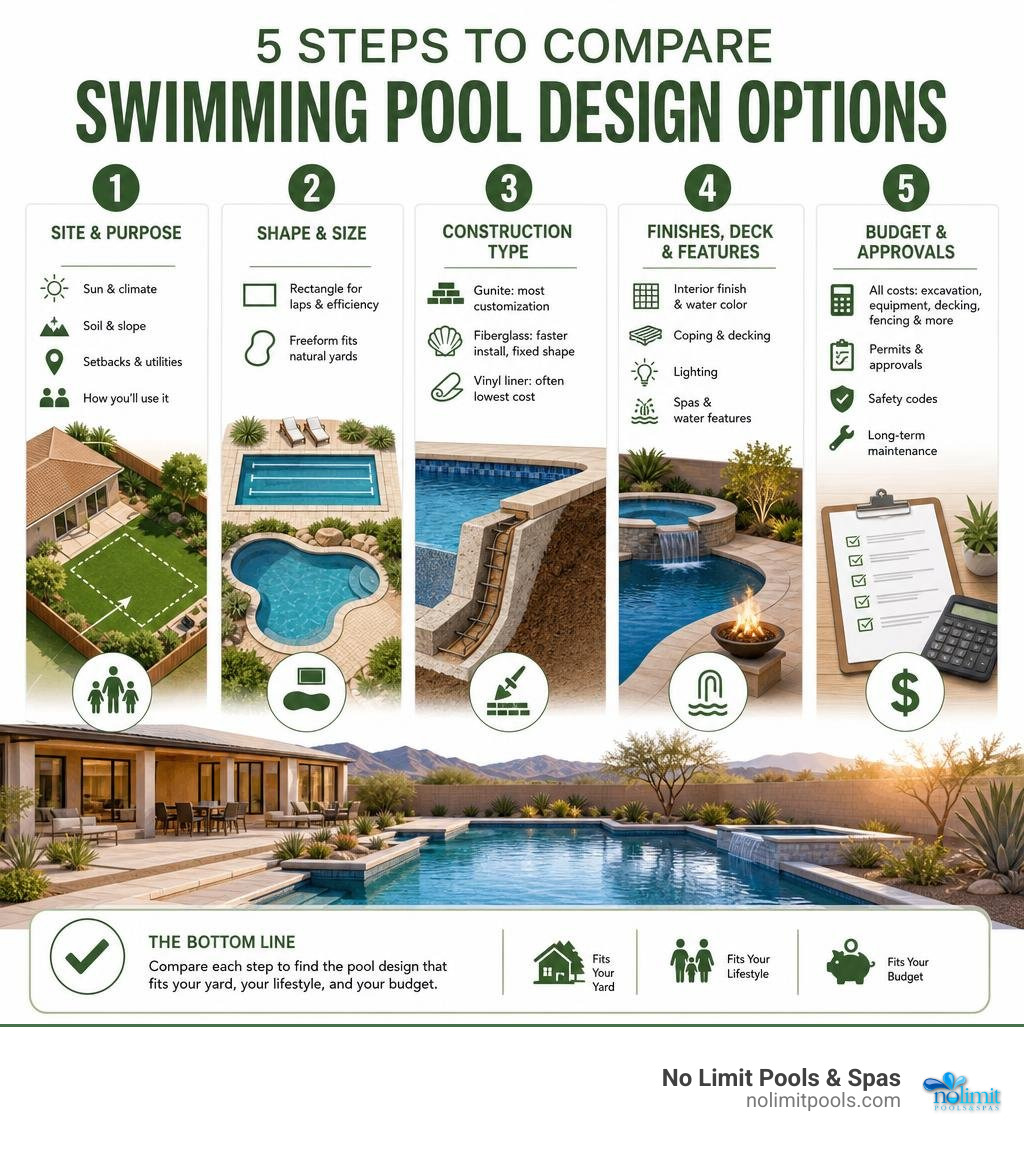
Swimming pool design starts with matching the pool to your yard, how you will use it, and the total budget – not simply choosing a shape from a photo. The quickest way to compare options is to review these decisions in order:
- Site and purpose: Account for sun, soil, slope, setbacks, utilities, and whether the pool is for family play, entertaining, exercise, or relaxation.
- Shape and size: Rectangles use space efficiently and suit lap swimming; freeform pools can better fit organic landscapes or irregular yards.
- Construction type: Gunite offers the most customization, fiberglass installs faster with fixed shell shapes, and vinyl liner is often the lowest-cost inground option.
- Finish, deck, and features: Interior finish affects water color and upkeep, while coping, decking, lighting, spas, and water features shape comfort, safety, and cost.
- Budget and approvals: Include excavation, decking, fencing, equipment, permits, long-term maintenance, and local safety requirements from the start.
A well-planned pool should feel connected to the home, patio, landscape, and the way your household spends time outdoors. For Arizona homeowners, heat, sun exposure, drainage, and cool, slip-resistant deck surfaces deserve just as much attention as the pool itself.
I am Marc Ballard, owner of No Limit Pools & Spas in Mesa, Arizona, where I help homeowners plan and build custom swimming pool design projects and complete outdoor living spaces. We serve many nearby East Valley communities, but No Limit Pools & Spas no longer services Phoenix.
Fundamental Factors in Custom Swimming Pool Design
Before choosing tile colors or testing water slide speeds, we must look at the foundation of your outdoor space. A successful pool isn’t just dropped into a yard; it is engineered to harmony with your property’s natural environment and everyday lifestyle.
Evaluating Site Terrain, Climate, and Intended Usage
When evaluating your site, orientation to the sun is one of the single biggest factors. Positioning your pool where it receives direct sunlight keeps water naturally warm while reducing heating bills. However, in hotter climates like our Arizona summers, balance is key—incorporating shade structures, pergolas, or tall umbrella sleeves ensures you can enjoy the pool deck without scorching.
Beyond sunlight, property boundaries, local municipal setback requirements, and underground utility placement dictate your pool’s physical footprint. Severe slopes, hard pan soil, or caliche require special engineering and specialized excavation equipment, which impact initial site prep budgets.
How your household plans to use the pool dictates its physical structure:
- Family Fun & Games: Shallow play zones, wide entry steps, integrated tanning ledges, and volleyball setups prioritize active play and easy supervision.
- Fitness & Lap Swimming: Long, continuous straight runs are essential. Maintaining an uninterrupted lane length—ideally 30 to 50 feet—is crucial. Unlocking the secrets behind quality pool design often involves smart step placement, positioning stairs off to the side to preserve clear lap channels.
- Relaxation & Entertaining: Bench seating, swim-up bars, connected spas, and ambient water features turn the pool into an inviting lounge retreat.
Choosing the Right Swimming Pool Design for Your Site and Budget
Your yard’s footprint heavily influences whether geometric or organic curves suit your property better.
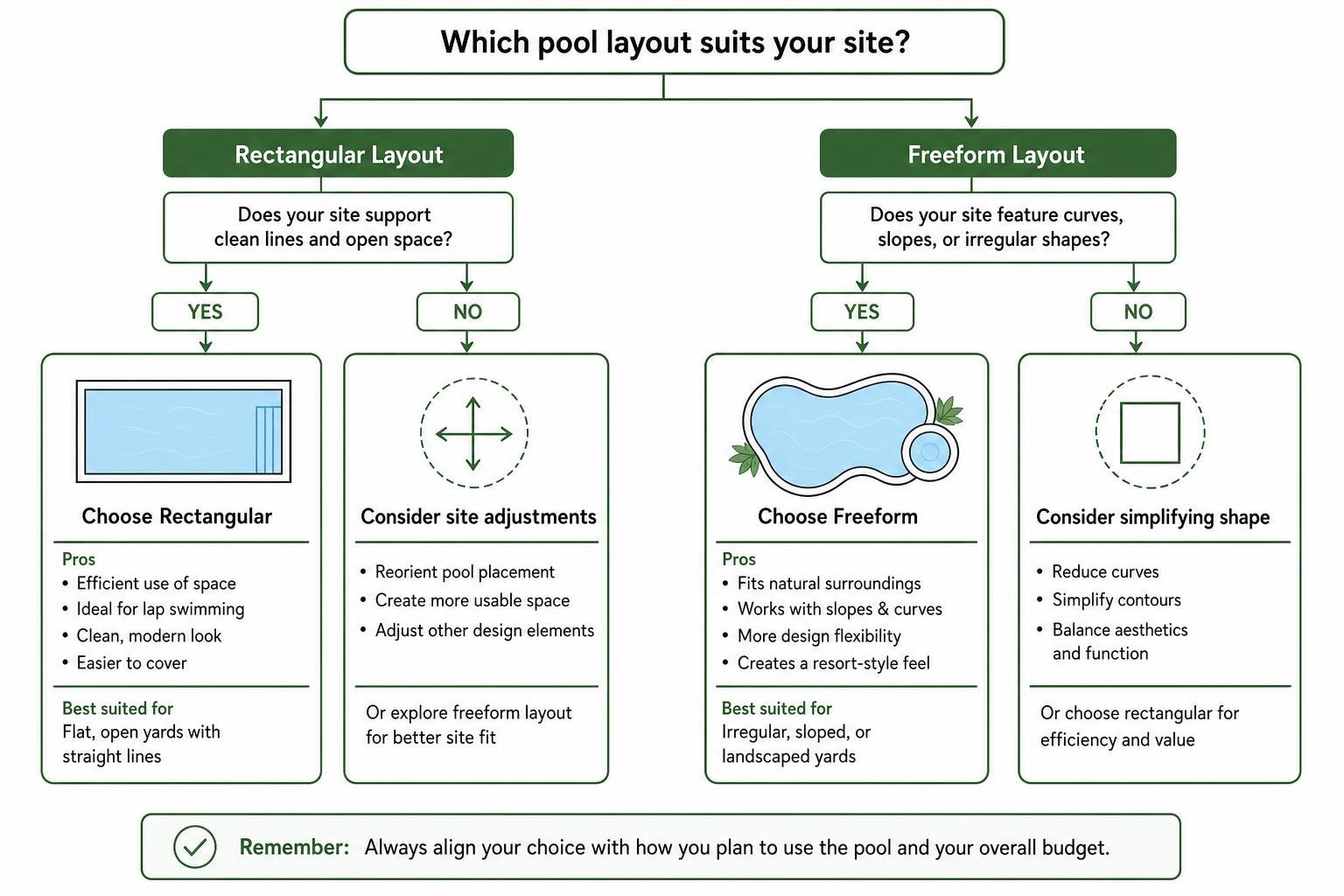
- Rectangular & Geometric Designs: Straight lines and right angles account for roughly 55% of custom pools. Geometric designs complement modern, contemporary, and formal traditional architecture. A classic 16×32-foot rectangle remains the industry standard suburban footprint, providing balanced room for casual swimming and entertaining. For serious lap swimmers, a 20×40-foot layout offers exceptional exercise capacity.
- Organic & Freeform Designs: Representing around 34% of designs, freeform styles—such as kidney, lagoon, and figure-8 shapes—mimic natural bodies of water. They curve around existing structures, patio covers, or mature trees, making them perfect for irregular or sloped backyards.
Whether you explore a digital pool design visualizer or start sketching Swimming pool designs and plans, matching pool geometry to your home’s architectural lines ensures a seamless visual transition between indoor and outdoor spaces.
Comparing Inground Construction Methods: Gunite, Fiberglass, and Vinyl
The core structural material you select determines how long your pool lasts, how much customization you can achieve, and what long-term maintenance looks like.
| Feature | Gunite / Shotcrete | Fiberglass Shell | Vinyl Liner |
|---|---|---|---|
| Customization | 100% Unlimited (Any shape, depth, feature) | Limited to pre-molded catalog shapes | High flexibility, mostly standard geometries |
| Build Timeline | 8 to 14 weeks (3 to 6 months total) | 2 to 4 weeks post-permitting | 4 to 8 weeks |
| Structural Lifespan | Indefinite (Shell lasts decades) | 25 to 30+ years | 25+ years (Structure only) |
| Surface Refinishing | Resurface every 10 to 25 years | Gelcoat touchups rare | Replace liner every 7 to 12 years |
| Average Cost Range | $52,000 – $150,000+ | $44,000 – $92,000 | $26,000 – $58,000 |
| Algae Resistance | Porous (Requires chemical balancing) | Non-porous (Resists algae growth) | Non-porous (Smooth, soft surface) |
Gunite and Shotcrete Custom Concrete Shells
Gunite and shotcrete pools represent roughly 60% of new inground installations across the country, dominating the custom luxury market. A steel rebar cage is tied directly inside the excavated site before concrete is pneumatically sprayed to form a dense, monolithic shell.
The distinct advantage of gunite is complete structural freedom. Want an integrated 12-foot round spa, a beach entry, custom grottos, or a built-in underwater bar stool? Gunite makes it happen. Because the concrete shell requires at least 28 days to cure before plastering, construction timelines typically run 3 to 6 months from initial contract to first swim. However, its long-term durability is unmatched.
Pre-Molded Fiberglass Shells
Fiberglass pools consist of a factory-manufactured shell coated in a smooth gelcoat finish, delivered straight to your home on a flatbed trailer. Because construction involves setting the shell into an excavated hole and backfilling while filling it with water, installation finishes in just 2 to 4 weeks.
The non-porous gelcoat surface naturally resists algae, dropping ongoing chemical demands by 50% to 70% compared to traditional concrete. The main limitation is size: highway transport laws restrict shell widths to 16 feet and lengths to 40 feet. Furthermore, built-in features like tanning shelves and steps are locked to the specific factory mold you select.
Custom Vinyl Liner Systems
Vinyl liner pools utilize framed walls—made from steel, aluminum, or polymer panels—set upon a smooth vermiculite base, over which a custom heavy-duty vinyl liner is fitted.
Vinyl liners represent the most accessible price point for inground pools ($26,000 to $58,000 installed). The liner feels noticeably soft underfoot and resists algae effectively. However, vinyl liners require complete replacement every 7 to 12 years (costing roughly $2,500 to $6,500), and sharp pets’ claws, misplaced pool toys, or lawn equipment can tear the material.
Evaluating Finishes, Decking, and Architectural Elements
Once the core construction method is set, tactile and visual finishes turn raw engineering into an outdoor centerpiece.
Interior Finishes: Plaster, Aggregate, and Glass Tile
Your interior finish directly dictates water color, surface texture, and resurfacing schedules:
- Standard White Plaster: The classic blend of white cement and crushed marble. It offers a smooth surface and traditional light blue water tone. It is budget-friendly but sensitive to water chemistry, lasting 7 to 12 years before needing resurfacing.
- Quartz Aggregates: Blends ceramic-coated quartz pebbles into plaster to increase stain resistance and durability. Lasting 12 to 18 years, quartz adds rich turquoise and deep blue sparkle.
- Pebble Aggregates: Utilizing smooth river pebbles or mini-pebbles, aggregate finishes create a natural, organic look. Pebble finishes are highly durable, lasting 15 to 25 years with proper water care.
- Full Glass Tile: The pinnacle of luxury pool design. Glass tile reflects sunlight brilliantly, impervious to chemical erosion, and can last 25+ years. Adding a full glass tile finish adds $20,000 to $60,000, but creates an unmatched aesthetic.
Homeowners frequently test finishes using interactive planning resources and 3D visualizers to explore different layout ideas and color combinations.
Coping and Decking Materials for Safety and Heat Management
Coping caps the top edge of the pool wall shell, providing a safe grip and transition to the broader patio deck. Deck space should ideally match or double the pool’s water surface area to accommodate seating, loungers, and dining tables comfortably.
When comparing decking materials:
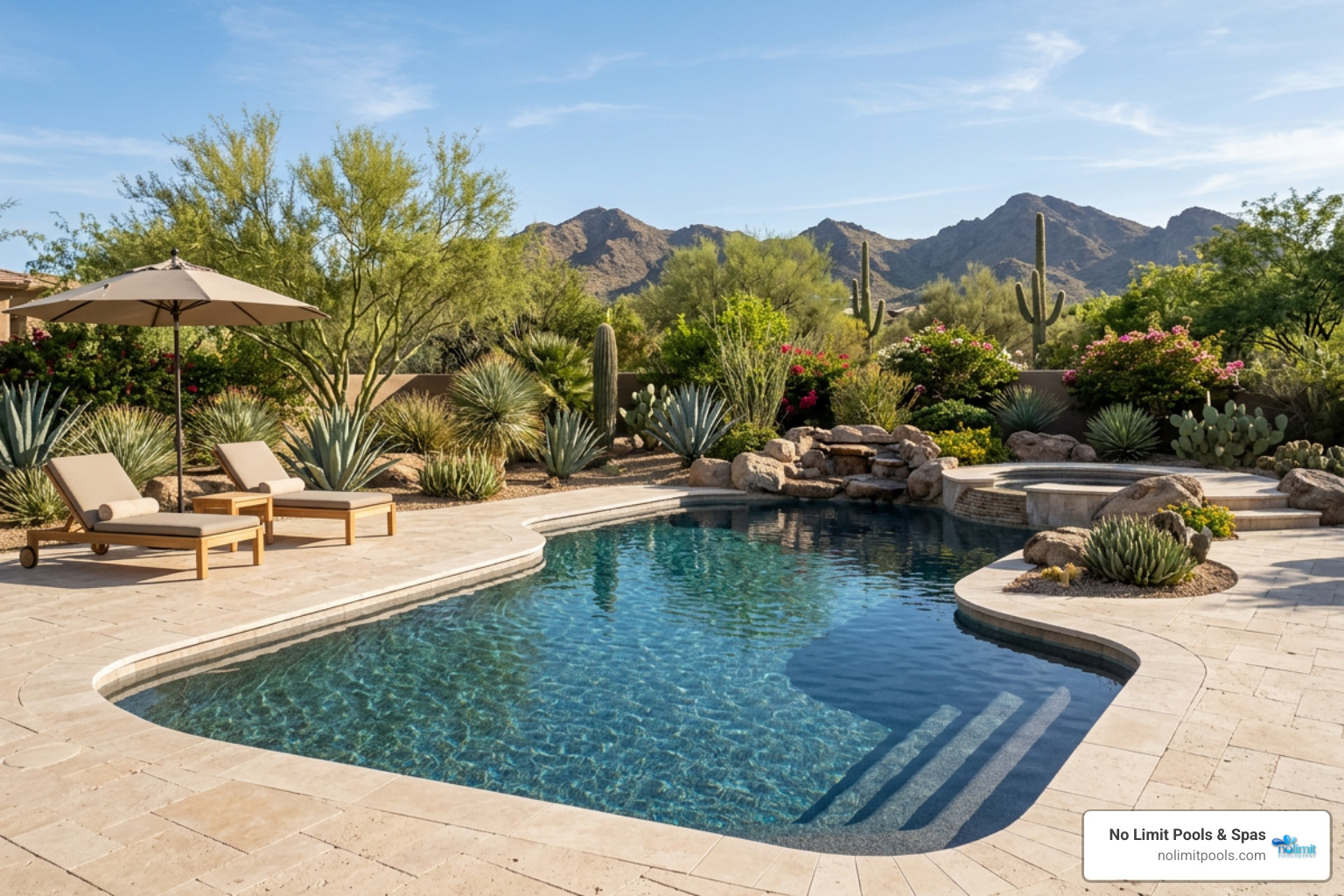
- Natural Travertine Pavers: Travertine remains the gold standard for high-heat environments like Arizona. Its natural porosity prevents it from absorbing excessive heat, remaining cool under bare feet during peak mid-summer sun. Travertine also delivers superior wet slip resistance.
- Textured Brushed or Stamped Concrete: Cost-effective and versatile. Adding cool-deck coatings keeps surface temperatures down while offering a clean, contemporary surface.
- Porcelain Deck Pavers: Modern porcelain offers ultra-low absorption rates, pristine geometric lines, and strong stain resistance.
- Turf and Stone Combinations: Interlocking stone pavers with strips of synthetic turf create a vibrant, modern resort feel. Installing a concrete sub-deck beneath ensures proper drainage and long-term stability.
For more inspiration on deck integration, explore our ideas on Modern contemporary pool designs landscaping ideas.
Modern Water Features, Spas, and Sanitation Options
Dynamic water features, integrated heating, and automated water treatment systems bring high visual appeal and convenience to modern pool ownership.
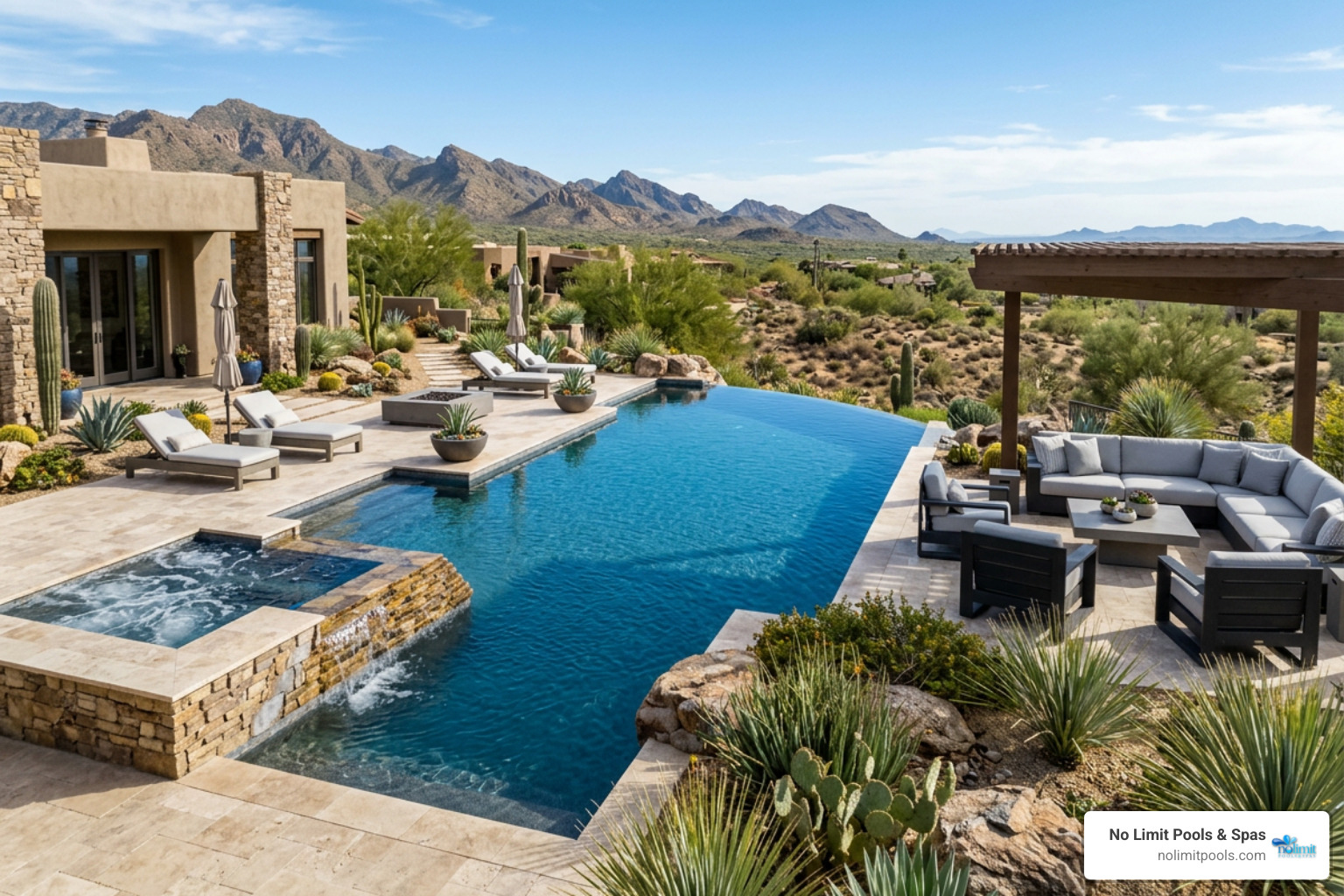
Modern Features to Enhance Your Swimming Pool Design
Modern pool upgrades enhance sensory atmosphere while serving functional swimming roles:
- Vanishing Edges (Infinity Edges): Water spills over a lowered back wall into a hidden catch basin, creating a continuous visual flow into the horizon. Single vanishing edges typically add $15,000 to $45,000 in engineering and pump systems.
- Sheer Descent Waterfalls: Linear, glass-like sheets of water flush out from raised bond beams. They provide soothing ambient sound that masks ambient neighborhood noise.
- Tanning Ledges (Sun Shelves): Shallow platforms (6 to 12 inches deep) designed for in-water lounge chairs and bubblers. They double as safe shallow play zones for supervised toddlers.
- Attached Raised Spas: Spillovers from an elevated hot tub into the pool create a focal architectural element while offering year-round warm hydrotherapy.
- Linear LED Coping Lighting: Subtle LED strips mounted under cantilever coping edges produce vibrant, energy-efficient nighttime illumination at $3 to $5 per month in operating costs.
If you are exploring creative ideas, review these 6 swimming pool design ideas that are sure to impress.
Saltwater Systems vs. Traditional Chlorine Sanitation
Sanitation systems maintain clean, safe pool water, but operate on different chemical mechanics:
- Saltwater Chlorination Systems: An electrolytic salt cell converts dissolved food-grade salt into pure chlorine automatically. Saltwater pools eliminate chemical odors, reduce eye irritation, and leave skin feeling remarkably soft. While upfront equipment costs are higher, ongoing chemical handling is significantly reduced.
- Traditional Chlorine Systems: Relies on manual chlorine tablets, liquid, or shock. Upfront equipment costs are lower and mechanical components are simple, but water chemistry requires more frequent testing and manual balancing.
Tools like an interactive 3D tool or a Free Pool Design Generator & Cost Estimator help evaluate upfront equipment selections during initial concept stages.
Cost Factors, Permitting, and Building Safety Standards
A complete pool build budget encompasses far more than just the water vessel shell. Knowing line-item expenses prevents unexpected financial surprises during excavation.
Structural Budget Drivers and Ongoing Maintenance
Core drivers behind custom pool costs include:
- Shell Construction & Sizing: Basic vinyl pools run $26,000 to $58,000; mid-range fiberglass shells run $44,000 to $92,000; standard rectangular gunite pools range from $52,000 to $95,000; high-end custom gunite projects with premium pebble finishes, spas, and travertine decking reach $120,000 to $250,000+.
- Site Access & Excavation: Rock removal, steep sloped lot grading, or tight access points between houses increase initial excavation fees.
- Decking & Landscaping: Surround decking, perimeter safety fencing, retainage walls, and landscape lighting typically add 30% to 50% on top of the base pool shell cost.
- Energy-Efficient Equipment: Energy Star-rated variable speed pumps cost more upfront but save 50% to 80% on monthly electrical bills compared to legacy single-speed pumps.
- Annual Maintenance: Budget roughly $1,200 to $4,000 annually for routine water chemistry, filter cleanings, power, and seasonal maintenance.
Local Permits, Barrier Fencing, and VGBA Compliance
Building a swimming pool requires navigating structural building, electrical, and plumbing permits. Safety regulations are strictly enforced to protect families and guests:
- Safety Barrier Fencing: Local building codes (such as IRC Section R326) mandate perimeter safety fencing at least 48 inches high with self-closing, self-latching gates opening outward away from the pool.
- Virginia Graeme Baker (VGBA) Safety Act: Federal law mandates dual suction outlets and ANSI-compliant anti-entrapment drain covers on all main drains to prevent suction entrapment hazards.
- Electrical Bonding: Mandated under NEC Article 680, copper bonding wire links all metal pool components, pumps, lights, and ladder anchors to prevent electrical potential hazards.
To dig deeper into standard safety questions, check out these Questions being asked about swimming pool design.
Frequently Asked Questions About Swimming Pool Options
What is the most durable construction material for an inground pool?
Gunite (pneumatically sprayed concrete) is widely recognized as the most durable inground pool structure. A gunite concrete shell will last for decades. While its plaster finish needs resurfacing every 10 to 25 years (depending on whether you select standard plaster, quartz, or pebble aggregate), the core structural vessel remains rock solid indefinitely.
How do pool finish choices affect the water color?
Water color is created by sunlight reflecting off the interior finish pigmentation and refracting through water depth. White plaster produces classic light sky-blue water. Light blue or tan pebble aggregates create vibrant tropical turquoise hues. Dark charcoal, dark gray, or black plaster finishes produce deep cobalt blue or dark mirror-like reflective surfaces that highlight surrounding architecture.
How long does the pool construction process typically take?
Timeline depends directly on your structural material:
- Fiberglass Pools: Take 2 to 4 weeks post-permitting from excavation to swim.
- Vinyl Liner Pools: Take 4 to 8 weeks on average.
- Gunite Concrete Pools: Take 3 to 6 months (8 to 14 weeks of active construction) due to complex steel rebar work, pneumatic concrete placement, a mandatory 28-day concrete shell cure period, plastering, and water chemistry balancing.
Permitting, HOA reviews, and site engineering can add 2 to 8 weeks before digging begins.
Transforming Your Vision into a Custom Backyard Oasis
Comparing pool options comes down to prioritizing what matters most to your family: long-term durability, rapid installation, specialized water features, or low-maintenance upkeep. By working step-by-step through site demands, geometric shapes, construction methods, finishes, and realistic budget factors, you can design an outdoor space that brings years of enjoyment.
At No Limit Pools & Spas, we specialize in bringing dream backyards to life across Mesa and nearby East Valley communities. From luxury custom gunite pools and integrated spas to complete outdoor kitchens, cool travertine decking, and custom shade structures, our team handles every detail with personalized care and expert craftsmanship. Explore options with our expert Custom swimming pool designers and build an outdoor retreat you will love for generations.